
Coroot at Nerdearla & Percona University
 Alexander Lamberton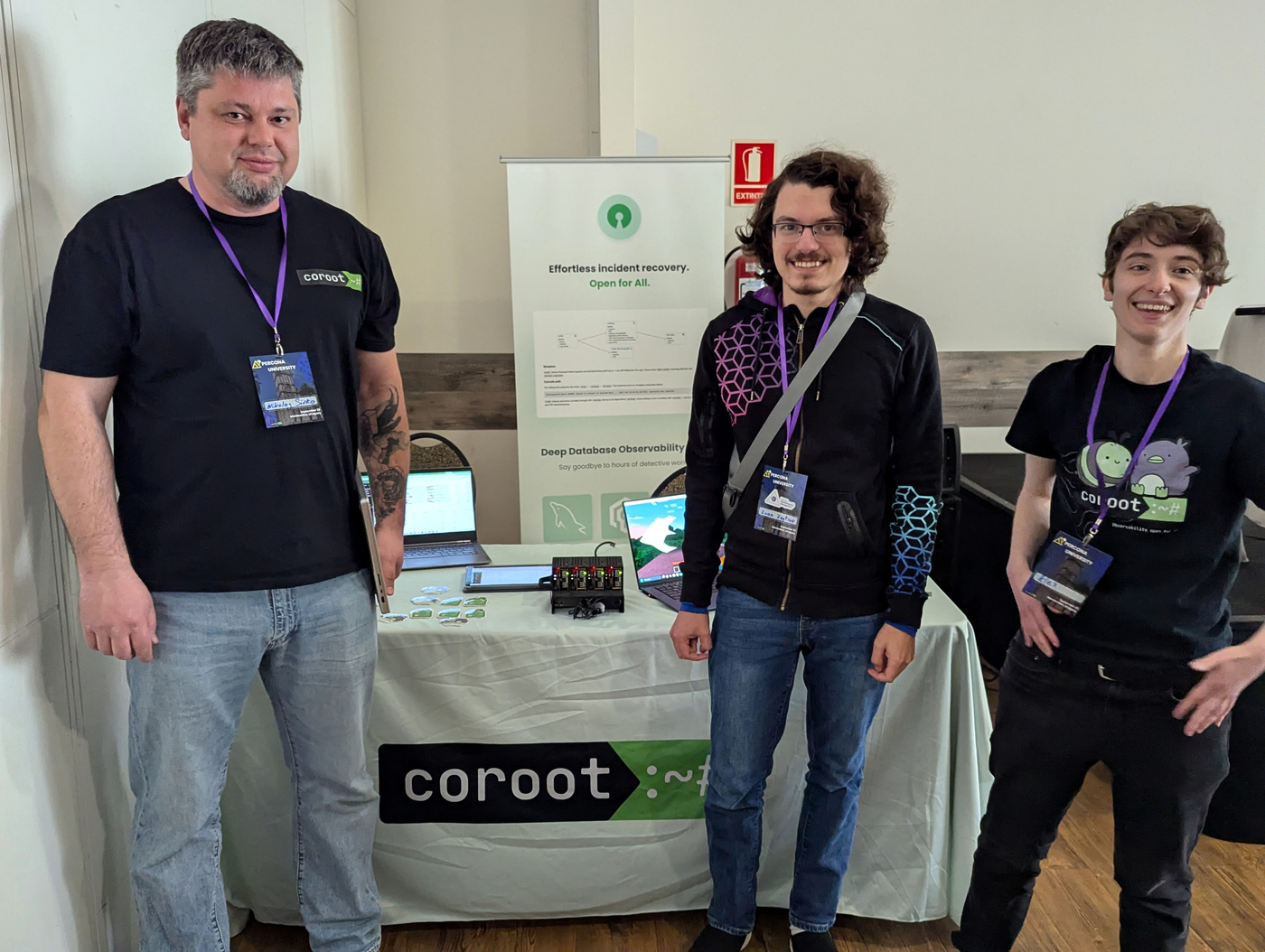
In September 2026, Coroot headed off to South America for three events: Percona University, Nerdearla, and KCD Argentina.
Percona University was a great opportunity to connect with the local open source database community in Montevideo, Uruguay. Hosted by Coroot partner Percona, the free educational event covered a full day of entertaining talks on AI, observability, and emerging database tech.
Percona Team Member Ivan Zaitsev teamed up with us at the booth to show off his Raspberry Pi homelab: a Kubernetes cluster running in Minecraft inside a 3D-printed case, observed with Coroot!
Percona University kicked off with "State of Open Source Database Ecosystem," a keynote from Percona Founder and Coroot Co-Founder Peter Zaitsev. His picks for database projects to keep an eye on: TiDB, DuckDB, and VillageSQL.
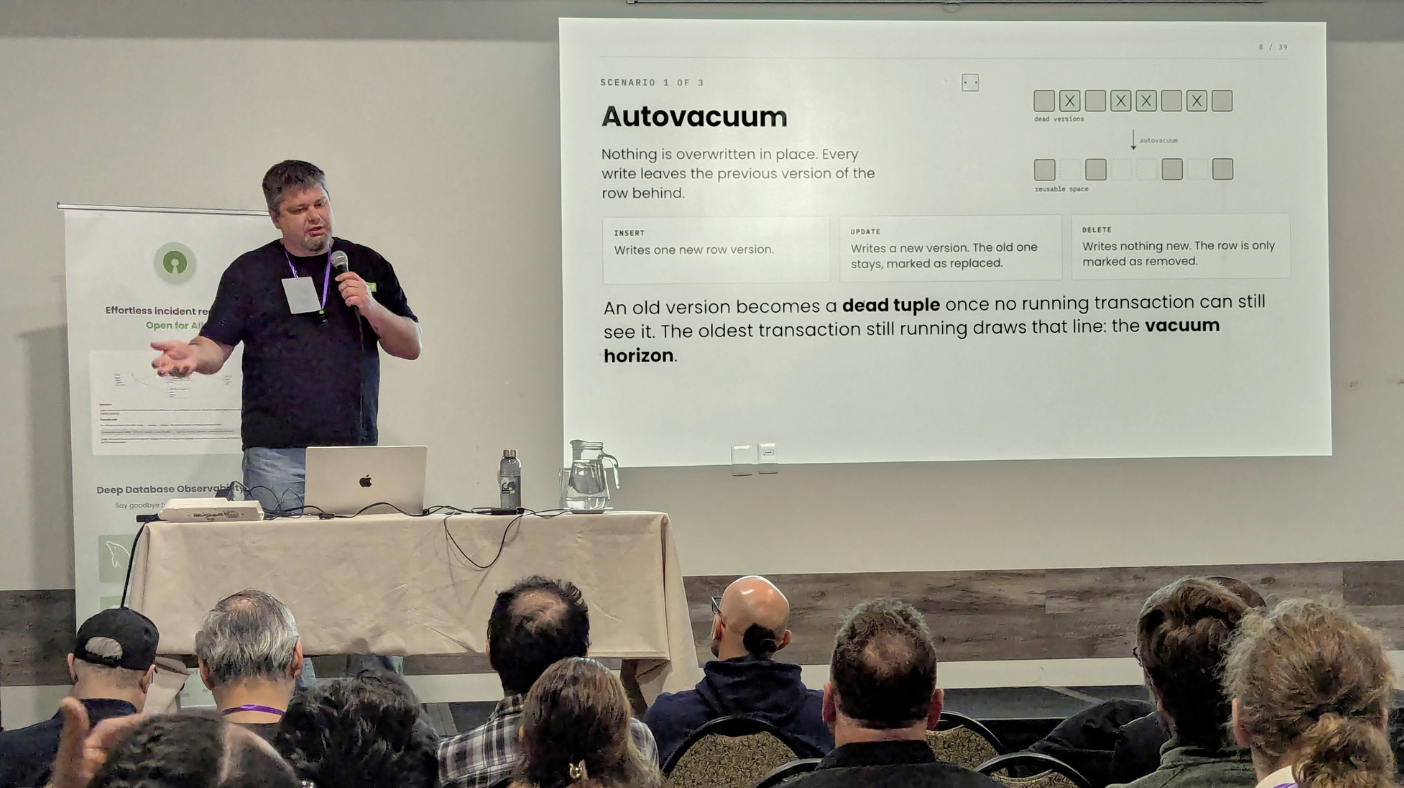
Coroot CEO Nikolay Sivko presented "Beyond 'Postgres is up'," sharing how Coroot’s new open source database observability features help DBAs and SREs ditch hours of manual root cause investigation. Sivko showed how Coroot's granular database insights detect and diagnose early warning signs of incidents, including failure scenarios related to autovacuum, replication, storage bloat, and Transaction ID Wraparound.
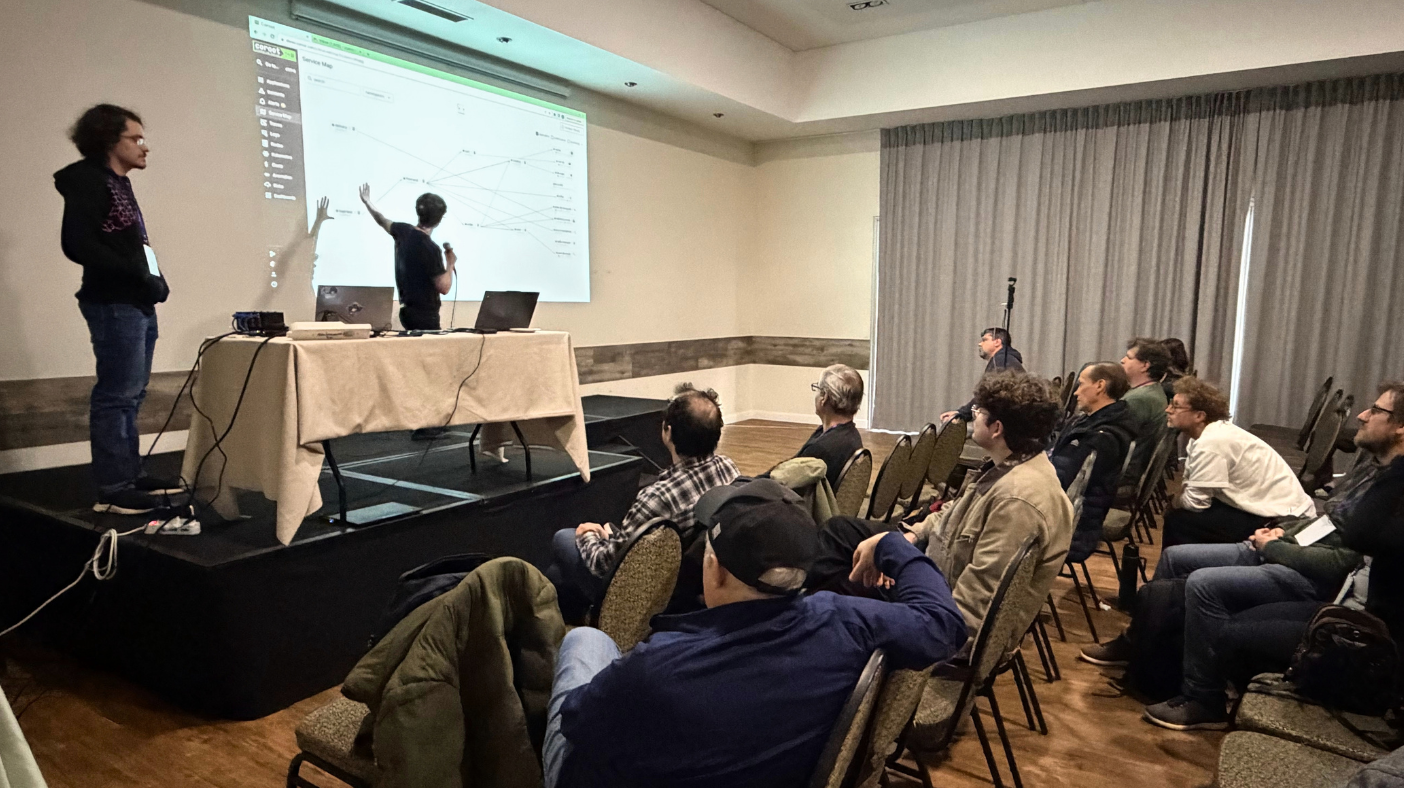
A crowd favourite was "TiDB 101" by Fernando Ipar, delivered with hand-drawn slides in true university-lecture fashion. To wrap up the day, Ivan and I jumped on stage for a lightning-talk overview of how Coroot uses eBPF to automate the otherwise painful, lengthy process of root cause analysis. Then the evening closed out with a raffle of cool prizes for the audience.
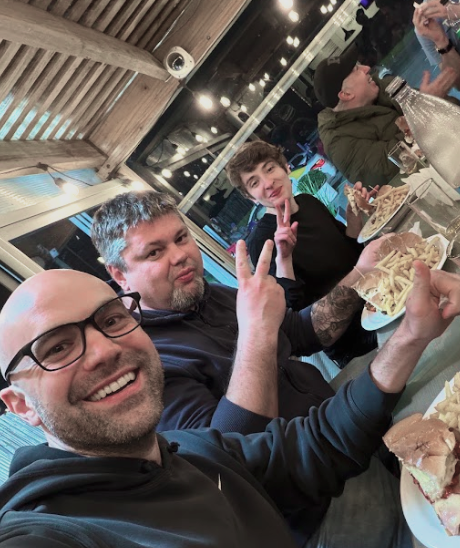
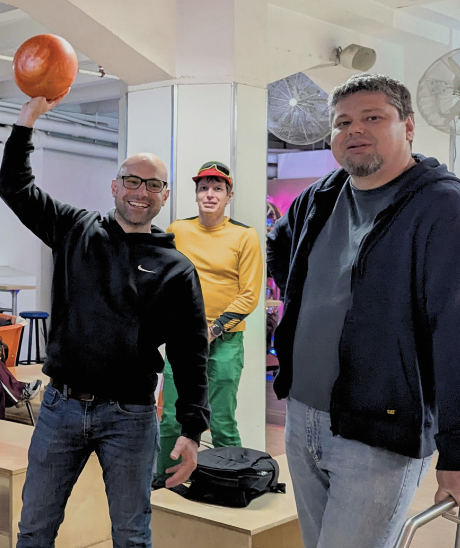
From meeting attendees who created compilers for obscure programming languages (Grigorii Nazarov) to expert organizers of DevOps events (Alexander Akilin) and everyone who came to chat at the booth: we had so much fun. Our thanks to the entire Percona Team for being great to collaborate with, organizing insightful events...and for showing us how pros should bowl.
Next up: a quick flight (or ferry ride) to Buenos Aires, Argentina. Nerdearla is one of the largest tech events in the Spanish-speaking world, so we had to see it for ourselves.
Empanadas, robots, database rock music, talks on solar flares, and the creator of Tor made an appearance. We were not disappointed!
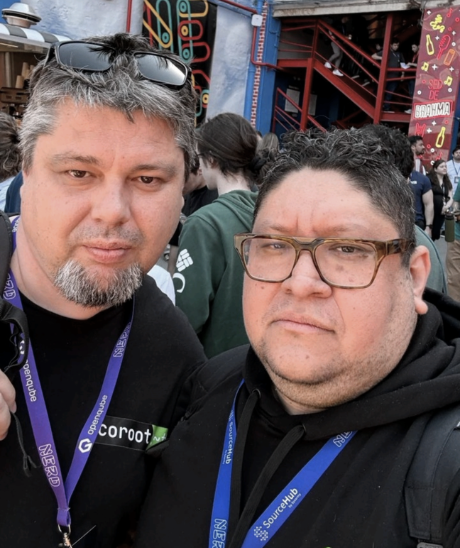
It was great to catch up with friends at the event such as Roberto Luna Rojas, Sr. Open Source Developer Advocate for Valkey (and past guest on Coroot's Open Observability Podcast), as well as Daniel Guzmán Burgos, Founder of DBTrail and one of Coroot's early supporters. Huge thanks to all the Sysarmy community members who reached out to meet up in person and discuss observability.
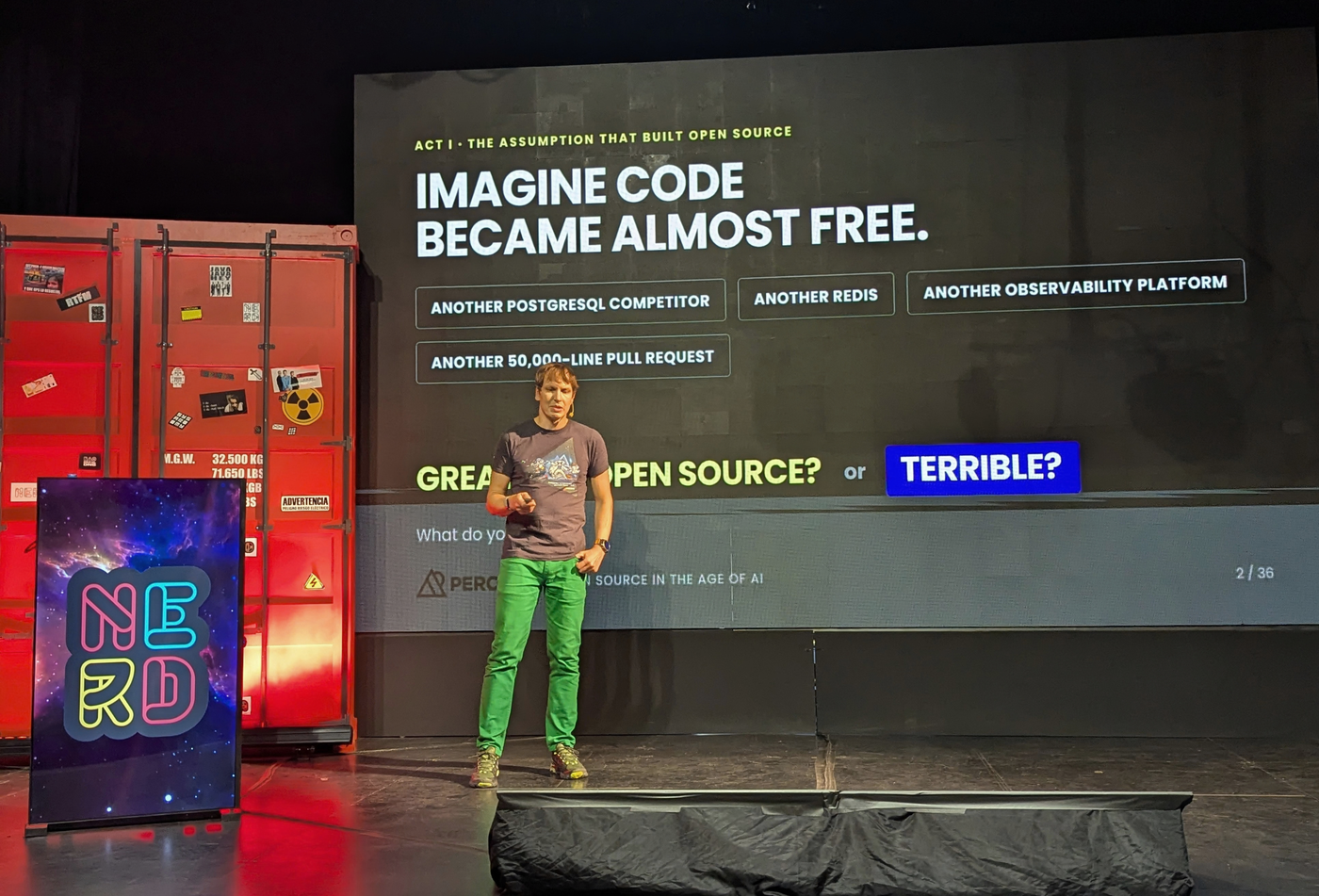
This time, Coroot Co-Founder Peter Zaitsev covered how AI could impact the future of open source. One of his final pieces of advice: software developers still need to understand code to review code. Even if software can be generated by LLMs, it is still important to learn how to program.
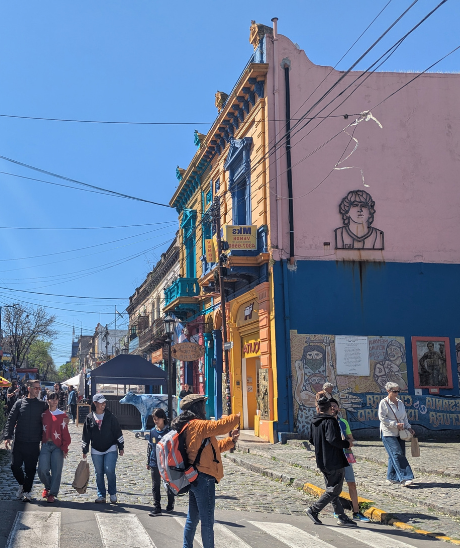
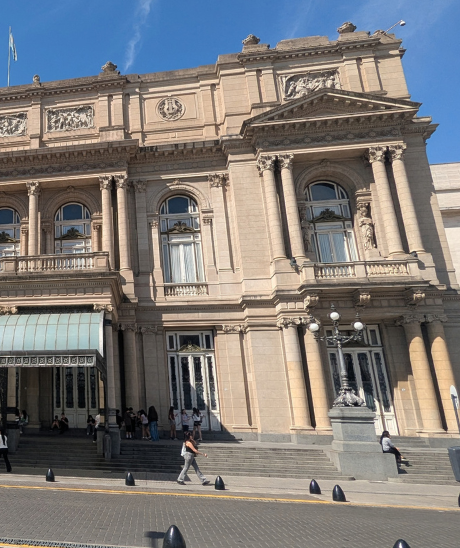
Buenos Aires is a beautiful city filled with diverse architecture and rich history. If you find yourself passing through for a conference, be sure to leave yourself time for a quick tour around the city...and a taste of asado, on both sides of the Río de la Plata.
Last stop: we’ll be heading to KCD Argentina this Saturday, October 3rd. We're looking forward to seeing you there!